(NEXSTAR) — Garth Brooks is one of country music’s biggest and most successful stars of all-time but you wouldn’t know that in today’s country landscape, especially among younger listeners from Gens Z and Alpha.
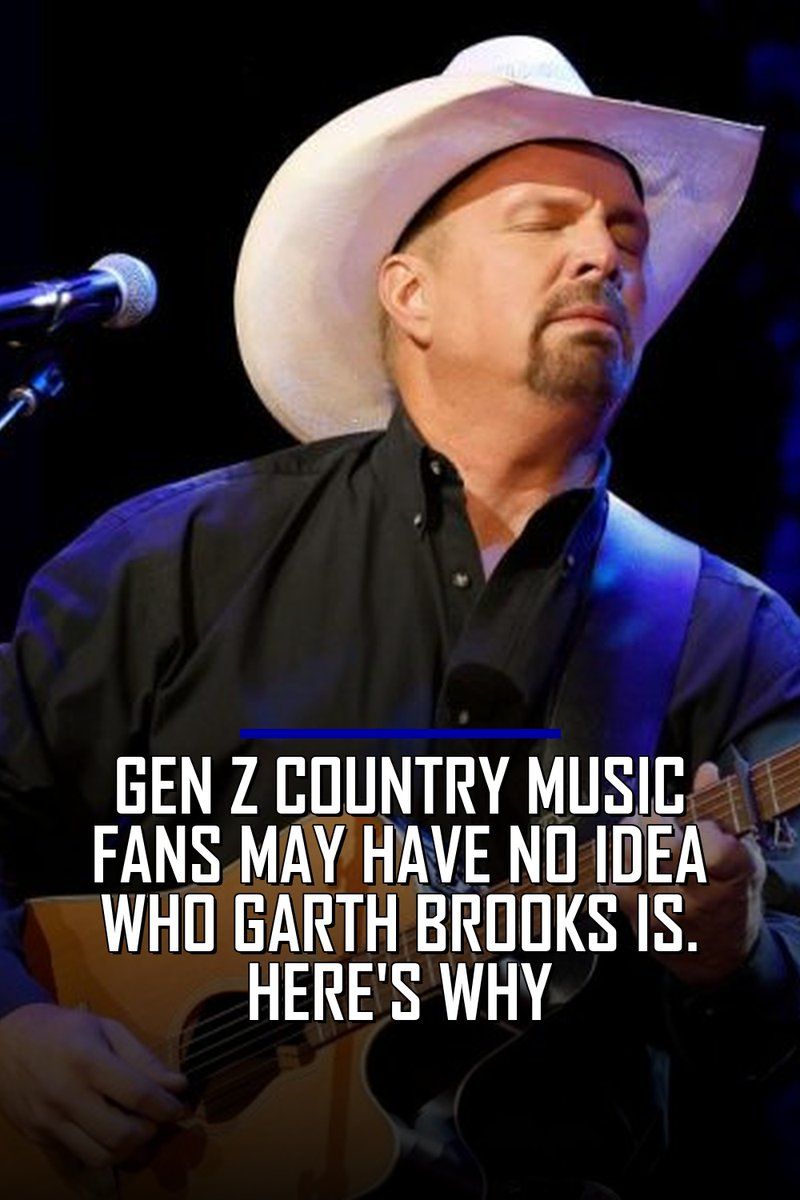
While Millennials were lucky enough to grow up in the 1990s, when Brooks’ chokehold on the genre was strongest, the artist’s impact is seemingly not very well known, or altogether forgotten, among those born during the ’90s and later.
It’s a well-documented phenomenon in recent years, and a frequent topic of discussion on the country music subreddit, where fans often wonder why Brooks’ influence is so rarely cited by newer country musicians — not to mention the general lack of awareness of his plethora of hits by younger generations.
In one mega thread last year on the topic, one Gen Z Redditor answered that while “I know plenty of Clint Black and John Michael Montgomery songs, I I know barely any Garth Brooks.”
And this is a common refrain. But why?
The reasons you might think may surprise you. It’s not because of ageism or just that newer artists are more popular now — after all, TikTok’s ability to make old songs modern hits, in addition to the popularity of “reaction” videos show that younger people are interested in discovering older music.
Garth Brooks’ long journey to streaming
Ultimately, the answer (which is well-documented) comes down to Brooks’ resistance to both digital and streaming music.
In the mid-2000s, as digital music stores like iTunes began to be the way younger listeners listened to music, Brooks declined to make his catalogue available for paid downloads. Instead, Brooks signed a deal with Walmart in 2005, which gave them exclusive distribution rights to his catalogue. Through this deal, Walmart released and sold both Brooks’ older albums, in addition to new music and exclusive releases.
The Walmart deal was a novel business idea, but in terms of music releasing, it was already a dated strategy. As Statistica data shows, CD sales were already declining big time by 2005, due to the advent of filesharing and digital purchases. Sales of CDs “nearly halved” between 2000 and 2007, the outlet explains.
Digital music’s popularity only continued to grow, with digital music sales surpassing CD sales for the first time in 2011. The trend only continued (before streaming disrupted it) through the 2010s, and by 2014, Brooks finally announced he was bringing his music to a digital music store — but not in the way you’d expect.

Instead of allowing purchases of his music on iTunes (or placing it on Spotify, which was already on the rise by this time), Brooks placed digital access to his music on his own exclusive platform called GhostTunes. Once again, though novel, it was an immediately dated business/access strategy, since the subscription-based streaming platform Spotify had begun to rise as the way to listen to music. For comparison’s sake, Brooks launched GhostTunes in 2014, just one year before Apple launched Apple Music.
The tides were already being turned.
By 2017, GhostTunes was closed down and Brooks inked a deal with Amazon, giving their service Amazon Music Unlimited, exclusive rights to his digital catalogue, where they remain. While this is significant progress in getting Brooks’ music to the masses, it still doesn’t seem to be working.
Though Amazon Music Unlimited has a 21.5% share of U.S. paid-subscribers, Apple Music and Spotify boast shares of 31% and 36.5%, respectively. While Amazon’s share is still great, the app just isn’t as popular with younger people as Spotify and Apple Music. Globally, Spotify alone has a 29.2% share of users ages 25-34, while it also has a 26.1% share of users ages 18-24, per SQ Magazine.
Over the years, Brooks has given multiple reasons for his resistance to streaming in general. The now 64 year-old has cited his dedication to “album listening” over playlist/single song consumption, which streaming services do tend to prioritize. Brooks has also cited his Amazon deal giving him more control over distribution, in addition to Amazon’s presence as a retailer, where his albums can be sold in tandem.
While so far, Brooks doesn’t seem to have lost any favor with country music fans who grew up with him, even some other musical superstars have lamented Brooks’ absence from public consciousness.
Superstar and ‘The Voice’ judge Blake Shelton, who’s collaborated with Brooks, said in 2014: “I just hate to think that there’s a generation that hasn’t discovered him yet, because he’s too important. He’s the reason that I wanted to be a country singer. He’s the reason that I worked a summer and saved up to buy a black Takamine guitar with a cutaway on it.”