Long before she was celebrated as a global icon and a “National Treasure,” Dolly Parton was a radical, fearless songwriter. During the late 1960s and 1970s, she routinely shattered conservative boundaries by writing raw, unfiltered stories about women’s autonomy, systemic abuse, and the gritty realities of Southern life.
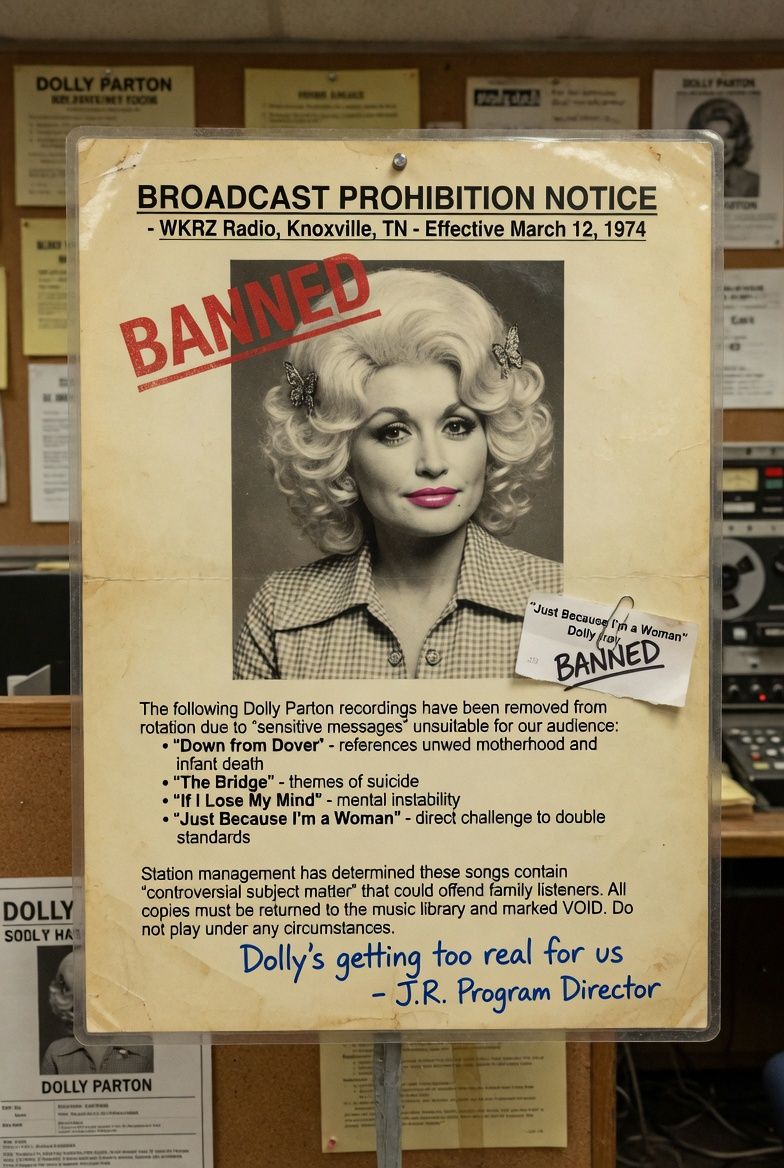
Conservative country radio programmers were terrified of her bold lyricism and routinely pulled her records from the airwaves.
Take a listen back to her three most heavily censored and misunderstood songs that radio stations refused to play:
1. “The Bargain Store” (1975)
-
The Controversy: This track was flat-out banned by nearly every major country radio station across the United States upon its release.
-
Why it frightened radio: Male DJs completely misread the lyrics. Dolly used the metaphor of a secondhand thrift shop to describe a woman trying to mend her broken heart after a devastating relationship (“The bargain store is open, come inside / You can easily afford the price”). Programmers deemed the lyric “vulgar” and “suggestive,” wrongly accusing Dolly of making a thinly veiled reference to prostitution.
-
Dolly’s take: “I swear on my life that I was never thinking about love in any vulgar way. Somehow, this lyric is a dirty thing to a man. I was just talking about a broken heart.” (The song defied the bans and eventually hit No. 1 anyway!)
2. “Down From Dover” (1970)
-
The Controversy: Dolly’s own mentor, Porter Wagoner, warned her that releasing this track would ruin her career, and radio DJs overwhelmingly refused to give it any airplay.
-
Why it frightened radio: The song tackled the ultimate social taboo of the era: an unwed, pregnant teenager who is abandoned by her lover and completely disowned by her ashamed parents. To make matters heavier, the story ends in absolute tragedy when the young woman gives birth to a stillborn baby. Radio stations found the mention of pregnancy out of wedlock too scandalous for the public.
-
Dolly’s take: “Back at the time when I put it out, they wouldn’t play it on the radio. Lord, now you can have a baby right on television. It’s all different.”
3. “Evening Shade” (1969)
-
The Controversy: This haunting track from her album My Blue Ridge Mountain Boy received virtually zero radio support due to its dark and shocking subject matter.
-
Why it frightened radio: Dolly leaned heavily into the Southern Gothic tradition, writing a song about severe child abuse. The track tells the story of an orphanage called Evening Shade, where a cruel, abusive headmistress terrifies the children. Pushed to their limits, the orphans band together, lock the matron inside, and burn the entire orphanage to the ground with her in it. Stations banned it out of fear that it would incite real-world violence.
Bonus Controversial Mention: “Touch Your Woman” (1972)
Though it went on to earn a Grammy nomination, this song was also banned by numerous stations for being “too explicit.” In reality, it wasn’t vulgar at all; it was a beautifully mature song about a married couple resolving a bitter argument through physical intimacy, tenderness, and touch—a concept conservative radio executives simply weren’t ready to let a woman sing about.
Dolly Parton’s history of radio bans proves that beneath the rhinestones, big hair, and bubbly smile, she has always possessed the fearless heart of a true musical rebel.