The infectious, booming bassline of “Oom Poppa Mow Mow” is etched into the DNA of American country music. When The Oak Ridge Boys released “Elvira” in 1981, it exploded into a multi-platinum crossover smash, dominating both the country and pop charts, winning a Grammy, and cementing the group’s legacy.
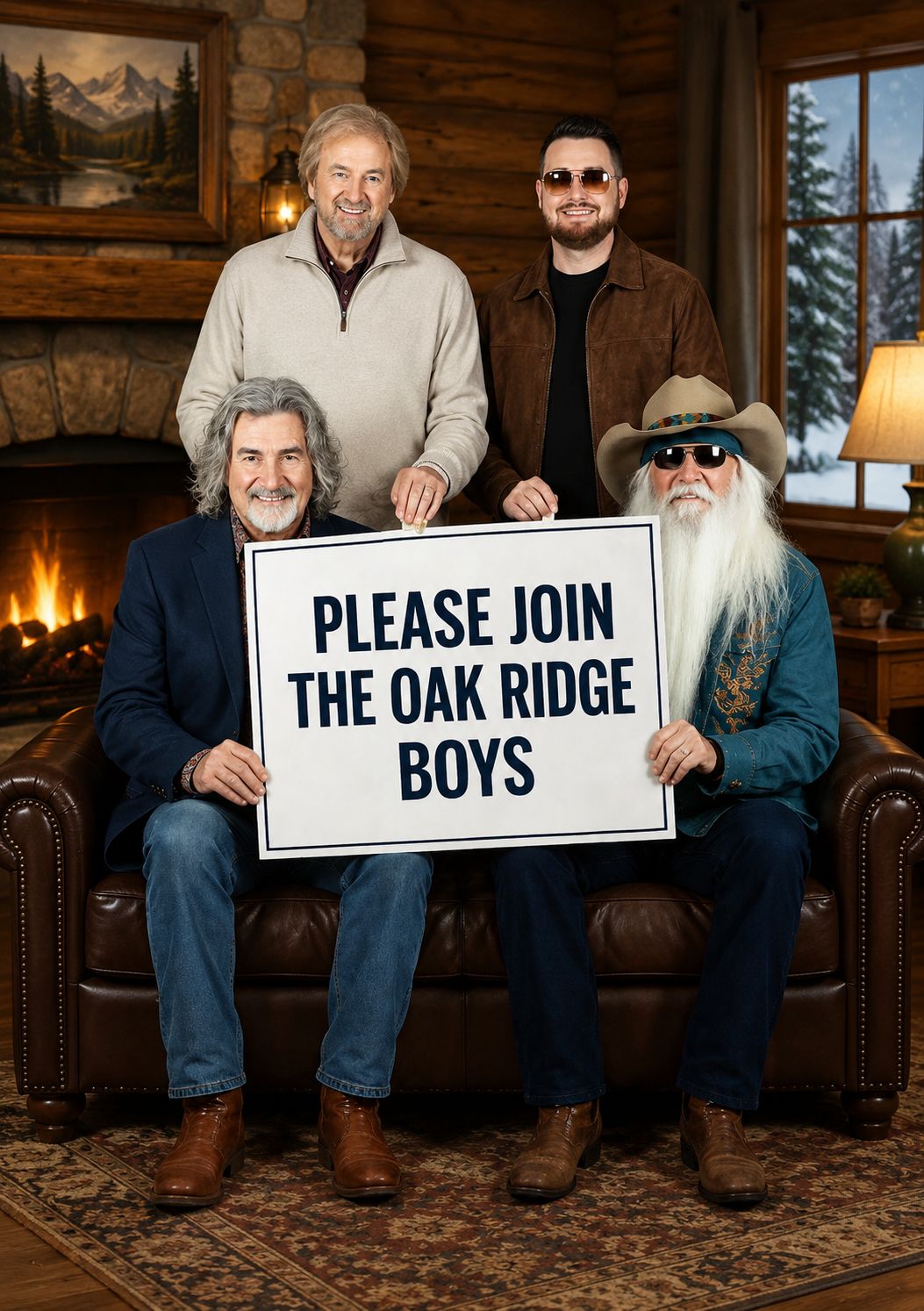
Yet, behind the bright harmonies and the bouncy rhythm lies a history that nearly prevented the song from ever being recorded by the group. The Oak Ridge Boys initially hesitated to touch it because of its origin story—a bizarre tale involving a street sign, a completely different musical genre, and an association with a smoky, late-night culture they weren’t sure fit their clean image.
1. It Wasn’t About a Woman (The Street Sign Origin)
For decades, listeners assumed “Elvira” was a sultry tribute to a drop-dead gorgeous Southern woman. In reality, the song’s muse wasn’t a person at all—it was a strip of asphalt.
The song was written in 1966 by a Texas-born singer-songwriter named Dallas Frazier. One rainy night, Frazier was driving through East Nashville, Tennessee, when he got lost. As he turned a corner, his headlights illuminated a muddy street sign that read: Elvira Street.
Frazier thought the name had a beautiful, rhythmic ring to it. As he drove, the wipers slishing against the windshield beat out a steady tempo, and he began humming the chorus that would eventually captivate millions. By the time he got home, “Elvira” was born—not out of a passionate love affair, but out of a simple Nashville street sign.
2. A Forgotten Blues-Rock Flop
Before it ever became a country anthem, “Elvira” belonged to an entirely different musical genre. Dallas Frazier originally recorded the song himself in 1966, but it was far from a country hit. It was a gritty, upbeat, blues-rock track with heavy R&B influences.
Frazier’s original version achieved minor success, but it quickly faded into obscurity. Over the next decade, a few other artists attempted to cover it—including gospel-pop singer Rodney Crowell and even Kenny Rogers’ first group, The First Edition—but it failed to gain traction. The song was widely considered a relic of the late-60s blues-rock era, a far cry from the sleek, four-part vocal harmonies of 1980s country music.
3. Why The Oak Ridge Boys Almost Refused It
When the song was pitched to The Oak Ridge Boys in late 1980, the group’s reaction wasn’t immediate excitement. In fact, there was significant internal pushback.
Before transitioning into secular country music, The Oak Ridge Boys had spent decades as one of the premier Southern Gospel groups in the United States. They had a deeply rooted, conservative fan base that watched their moral image closely.
To the Boys, Frazier’s original cut of “Elvira” felt a bit too “jukebox-heavy” and carried a distinct, smoky barroom vibe. Furthermore, the nonsense syllable hook—“Oom Poppa Mow Mow”—was heavily borrowed from 1950s secular doo-wop and rhythm-and-blues (specifically the 1962 hit “Papa-Oom-Mow-Mow” by The Rivingtons). The group worried that singing a song with such secular, rock-and-roll origins might alienate their traditional gospel following and come across as cheap or overly suggestive.
4. The 2:00 A.M. Studio Gamble
The turning point came down to a midnight jam session and the sheer persistence of the group’s legendary bass singer, Richard Sterban.
During a late-night recording session, the band was exhausted and looking for something loose to play. Record producer Ron Chancey suggested they just mess around with the old Dallas Frazier track. Band member Duane Allen began strumming the acoustic guitar, but the magic didn’t happen until Sterban stepped up to the microphone.
Sterban took the “Oom Poppa Mow Mow” line—which had been a casual, throwaway part of the original song—and dropped it down into his deep, resonant, window-rattling bass register.
The studio instantly electrified. The rest of the band locked into their harmonies, realizing that Sterban’s bassline had completely transformed the song from a gritty R&B track into an incredibly catchy, undeniable country-pop masterpiece.
From Scandalous Doubt to Platinum History
The Oak Ridge Boys took a massive gamble, pushed past their initial reservations, and released the track in March 1981.
The gamble paid off spectacularly. “Elvira” didn’t alienate their fans; instead, it catapulted the group into global superstardom. It became a No. 1 country hit, peaked at No. 5 on the Billboard Hot 100 pop charts, and earned them a Grammy Award for Best Country Vocal Performance by a Duo or Group.
What started as a muddy street sign in Nashville and a “scandalous” secular rhythm almost left on the studio floor became the definitive, career-defining smash for one of country music’s most celebrated vocal groups.