The grueling reality of touring is a burden most music icons tolerate, but for Agnetha Fältskog, it was an emotional and physical battlefield. While her bandmates managed to cope with life on the road, Agnetha’s deep-seated aversion to touring wasn’t just standard stage fright or a preference for the recording studio. It was fundamentally cemented by a terrifying, near-death airborne nightmare during ABBA’s 1979 North American tour—an incident so severe it left her with lifelong psychological scars.
Here is the true story of the night the sky nearly claimed ABBA, and how it changed Agnetha forever.
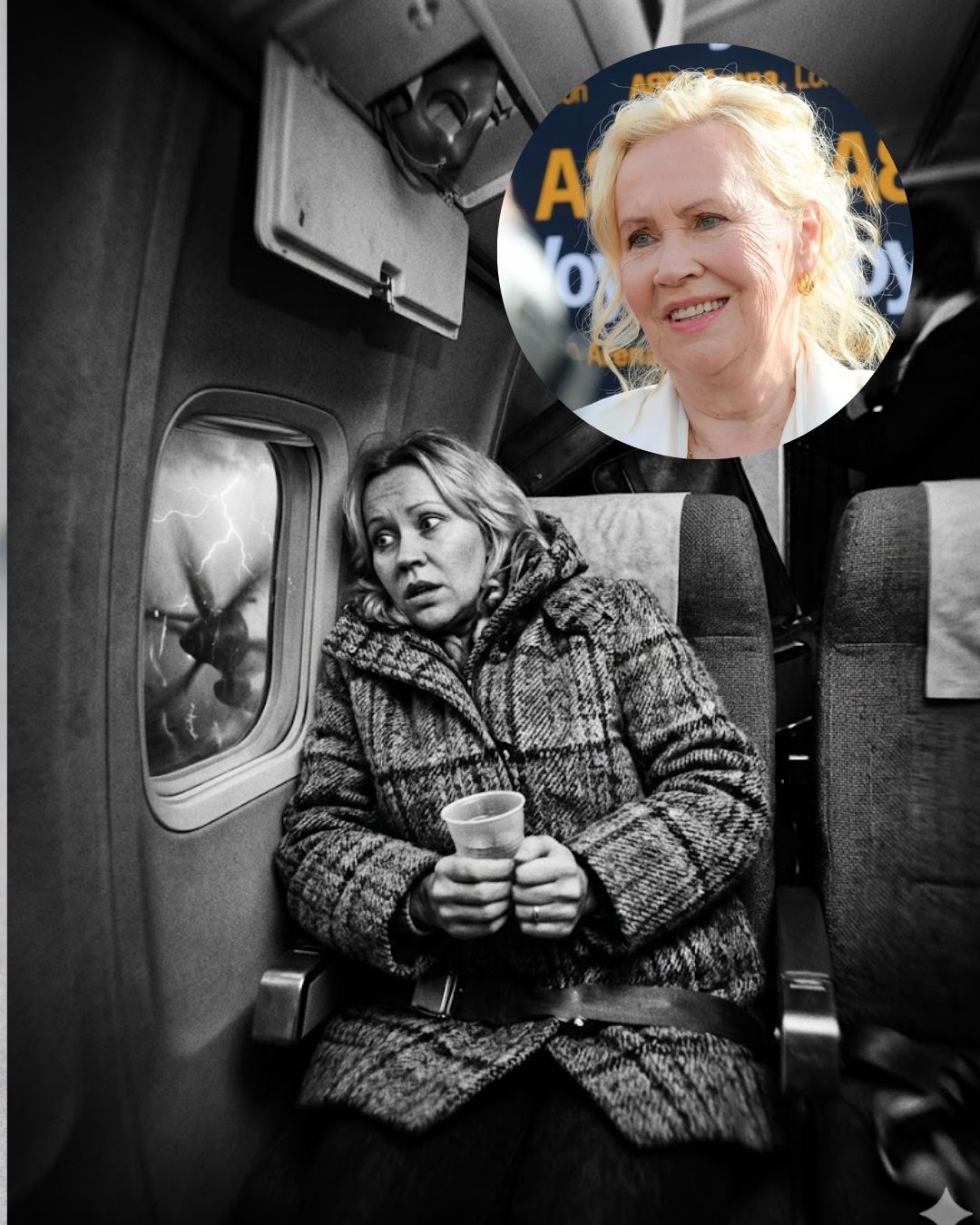
The Ill-Fated Flight to Boston
On October 3, 1979, ABBA was at the absolute peak of their global fame, navigating a massive, high-stakes tour across the United States and Canada. After performing a triumphant show in New York, the group boarded a private jet bound for their next stop: Boston, Massachusetts.
Agnetha already harbored a mild, underlying anxiety about flying, preferring to travel by limousine between cities whenever possible. However, the vast distances of the American continent left her with no choice but to board the aircraft.
As the plane cruised toward New England, the weather took an apocalyptic turn. Unbeknownst to the pilots, they were flying directly into an incredibly violent, unpredicted weather system—the infamous 1979 Windsor Locks F4 tornado, which was actively tearing through Connecticut and Massachusetts.
One and a Half Hours of Mortal Danger
Suddenly, the private jet was swallowed by pitch-black storm clouds. Severe, violent turbulence slammed into the aircraft, tossing the passengers and crew around the cabin like ragdolls. The wind shear was so intense that the pilots struggled to maintain control of the plane.
To make a terrifying situation even more critical, the extreme weather prevented the plane from landing at its scheduled destination. As the aircraft circled helplessly in the roaring tempest, the low-fuel warning lights began to flash. They were running out of gas in the middle of a literal tornado.
For ninety agonizing minutes, the passengers sat in sheer terror, convinced they were whispering their final goodbyes. Agnetha was frozen in panic, gripped by the suffocating certainty that the plane was going to crash.
“For one and a half hours, our lives were in mortal danger—that’s how it felt for me,” Agnetha later recalled.
Miraculously, through sheer piloting skill and luck, the captain managed to guide the fuel-starved jet through the storm and execute an emergency landing at a nearby airfield. They were physically safe, but the psychological damage was done.

The Show Must Go On
What makes the story even more incredible—and tragic—is what happened immediately after they touched down. Despite being profoundly traumatized, running on pure adrenaline, and arriving late because of the storm, ABBA refused to cancel that night’s performance.
They rushed from the airfield straight to the Music Hall in Boston. Agnetha walked out onto that stage, forced a brilliant smile beneath her blonde hair, and delivered a flawless, highly professional performance. Fans in the audience noted that the concert started late due to severe thunderstorms, but they had absolutely no idea that the golden girl singing her heart out in front of them had barely escaped a fatal plane crash just an hours prior.
The toll, however, caught up with her the next day. The combination of intense emotional distress, delayed shock, and a flu she was quietly battling forced the group to cancel their next scheduled concert in Washington, D.C.
The Lasting Scars
The 1979 airborne nightmare permanently altered the trajectory of Agnetha’s life. The incident magnified her mild aversion to flying into a full-blown, paralyzing phobia (aviophobia) and severe agoraphobia. For the remainder of ABBA’s active years, every single flight required to do international promotion or touring became a mountain of anxiety, requiring immense emotional strength and therapy just to endure.
When ABBA finally stopped touring and disbanded in 1982, Agnetha’s absolute refusal to travel by air became a defining factor of her solo career. For decades, she vowed never to board an airplane again. When she traveled across Europe to promote her solo music, she did so exclusively in a custom-built, heavy tour bus (a preference that ironically led to another scare when her bus flipped over on a Swedish motorway in 1983).
The near-death experience in 1979 was the final straw that broke Agnetha’s tolerance for the pop-star lifestyle. It explains why, when given the choice between the adulation of millions and the quiet safety of her remote, land-bound farm on Ekerö Island, she chose to stay firmly on the ground, leaving the turbulent skies behind for good.